
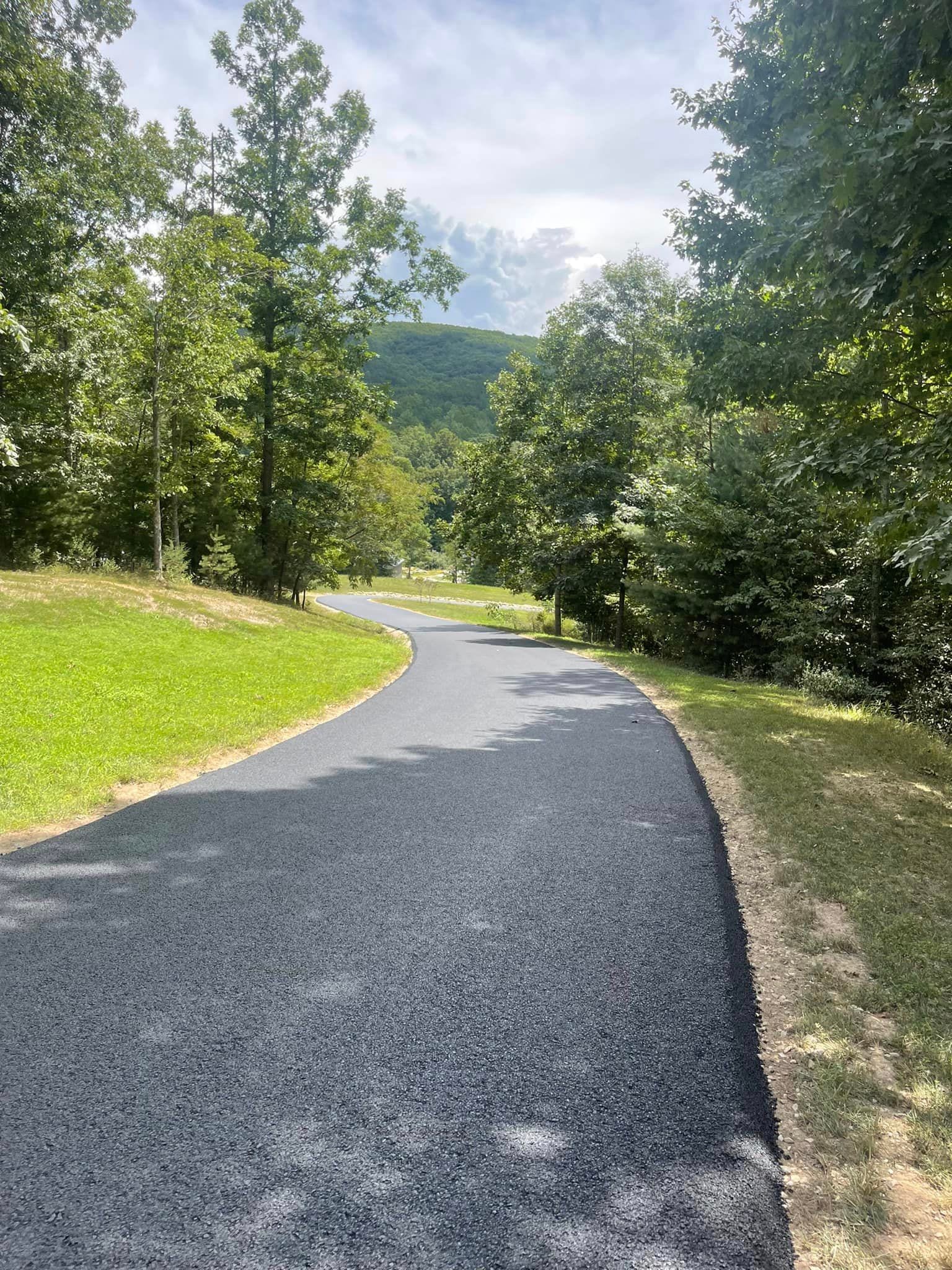
Residential & Rural Roads
Tar and Chip Driveways in Southwest Virginia
Hot liquid asphalt and crushed stone, rolled into a textured surface. Costs less than asphalt and suits long rural drives.
4.7
Google rating
173
Google reviews
A
BBB rating
2012
Year we started
Google Business Profile and BBB profile figures, checked October 1, 2026.
What is tar and chip?
Tar and chip, also called chip seal, is a layer of hot liquid asphalt with crushed stone spread over it and rolled in. The stone gives it grip and a rustic look that suits a farmhouse or a wooded lot.
It costs less than asphalt paving, and the savings grow with the size of the area. That's why it's common on long driveways and rural roads.
Tar and chip vs. a gravel driveway
Gravel on a long drive is a chore that never ends. It washes off the slope after a hard rain, throws dust all summer, and wants another load of stone every year. Binding the stone in asphalt cuts most of that work.
Is tar and chip right for your drive?
Tar and chip makes sense when
- It's a long or rural drive and cost per foot matters.
- Traffic is low to moderate: cars, pickups, the odd delivery truck.
- There's a slope where traction counts. The textured finish is skid-resistant.
- You like a natural look that blends into the land.
Asphalt is the better match when
- Heavy trucks or farm equipment use it every day.
- You want it smooth for bikes, strollers or a basketball hoop. Tar and chip is textured.
- Longest life matters more than cost. Asphalt usually outlasts it.
Benefits of tar and chip
Lower cost.Less than asphalt paving, which adds up on a long drive.
Grip.The textured, skid-resistant finish gives your tires traction on slopes.
Low upkeep.It needs little maintenance compared with other paving options.
Quick install.It goes down fast, so you're back on it sooner.
Our tar and chip process
Step 1: Prep
The area is cleared and graded for a stable base.
Step 2: Liquid asphalt
A layer of hot liquid asphalt goes down.
Step 3: Stone
Crushed stone is spread over the liquid asphalt.
Step 4: Roll
The surface is compacted to set the stone into the asphalt.
Step 5: Inspect
A final check before the crew leaves. Then stay off it 24 to 48 hours so it can settle and cure.
Tar and chip or asphalt?
Answer four questions about your drive and get a straight answer, tradeoffs included.
Question 1 of 4
What customers say
4.7
out of 5 on Google, from 173 reviews
Paving Plus was professional and efficient. Brandon & the crew went above and beyond expectations. Great job.
Tar and chip questions
How long does tar and chip last?
With proper maintenance, tar and chip can last 7 to 10 years.
Can I drive on it right away?
Wait 24 to 48 hours so the surface can settle and cure.
Can it handle heavy traffic?
It can, but it's more commonly used for low to moderate traffic, like driveways and rural roads. For heavy trucks every day, asphalt is the better match.
Is tar and chip cheaper than asphalt?
Yes. It costs less than asphalt paving, and the gap grows with the size of the area.
Will there be loose stone?
Some, at first. Not every chip sticks, and the extra works loose in the first few weeks.
Can I plow it?
Yes, with care. A rubber-edged blade, or a blade set a touch high, keeps from scraping up the stone.
Still have a question? Call (540) 731-3000
Where the crews lay tar and chip
Rural drives across Southwest Virginia, from Floyd and Giles County to Botetourt and Franklin. Pick your town to see local jobs and conditions.
Our other services
- Asphalt pavingSmooth, hard asphalt for driveways, parking lots and rural roads. The base and drainage get checked first, then hot asphalt is laid and rolled to carry your traffic.
- Asphalt repairCrack filling (including hot rubberized crack fill), patching, pothole repair, regrading low spots and resurfacing worn asphalt.
- SealcoatingA protective coat that keeps water, sun and oil out of your asphalt and fills small cracks. Plan on it every 2 to 3 years for driveways and lots.

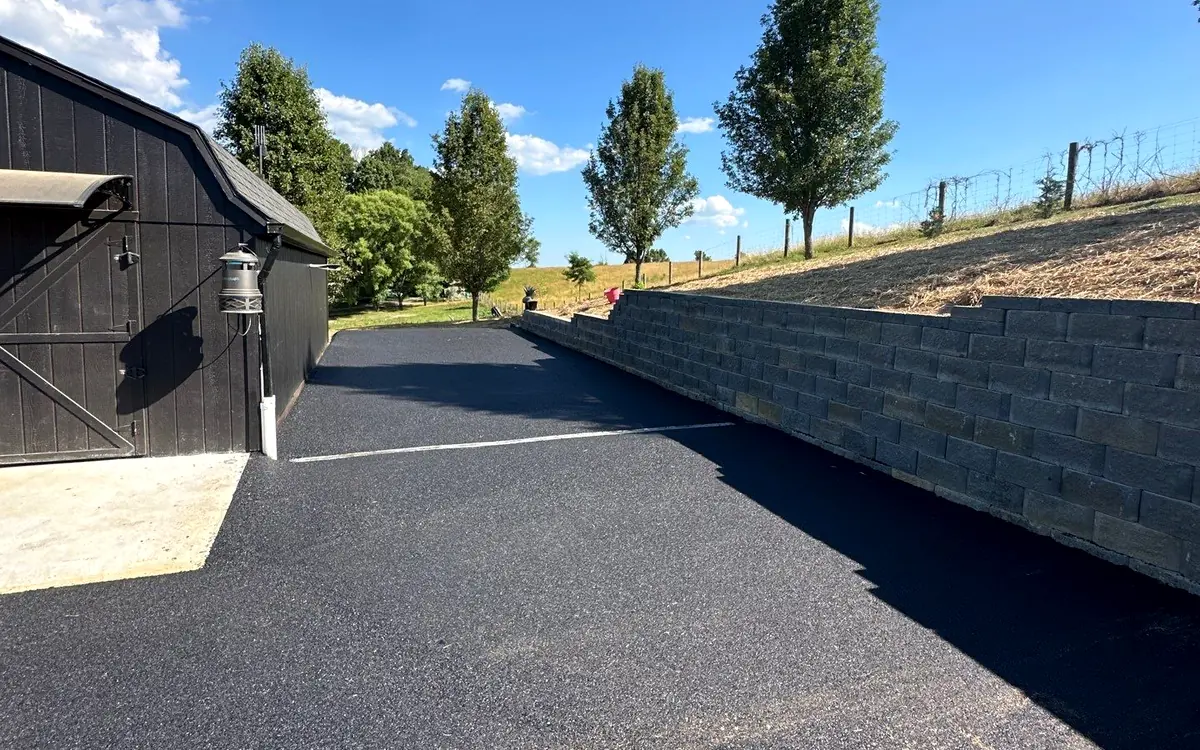

Get a free tar and chip estimate
Get a price for tar and chip on your drive, and an honest comparison with asphalt while you're at it.
The estimate is free.