
5 Asphalt Care Tips to Protect Your Driveway or Parking Lot in SWVA
By Paving Plus · Published June 27, 2025 · Reviewed October 1, 2026
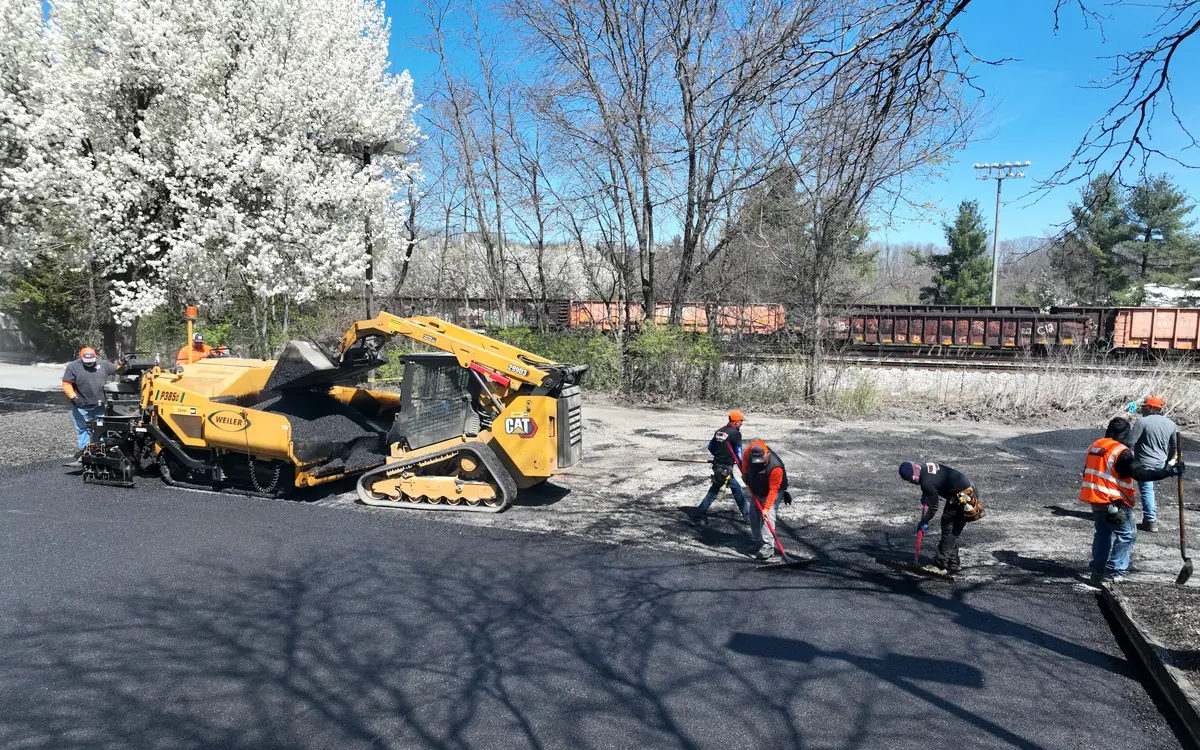
Pavement in this part of Virginia lives through very different winters depending on where it sits. Roanoke, at 974 feet, averages about 15 inches of snow a year. Blacksburg, at about 2,080 feet, gets about 23 inches and roughly 122 nights below freezing. Fancy Gap sits near 2,900 feet. Same asphalt, very different beating.
That's why these tips lean on water and cold. A lot of what breaks your driveway here starts with water getting in. For cold-weather steps, see the winter asphalt maintenance tips.
1. Sealcoat every 2 to 3 years
Sealcoat is a thin protective coat over the asphalt. It takes the sun, water, oil drips and de-icing salt so the asphalt underneath doesn't. Without it, your surface dries out, fades to gray and starts to crack.
Every 2 to 3 years is the usual interval, depending on traffic and weather, and busy parking lots lean toward the short end. Sealcoat fills small hairline cracks, but larger cracks and potholes need repair before sealing.
One caution for new driveways: fresh asphalt needs time to cure before its first sealcoat. Ask your contractor how long to wait, because sealing too soon can leave the surface soft.
More on sealcoating.
2. Fill cracks while they're small
A crack is an open door for water. In winter, that water freezes, expands and pries the crack wider. After enough cycles, the base underneath softens and the surface breaks into potholes.
Filling a narrow crack is cheap. Patching the pothole it turns into is not. Paving Plus offers crack sealing and hot crack filling.
More on asphalt repair.
3. Keep heavy loads off hot asphalt
Asphalt softens in summer heat. A loaded trailer, dumpster, camper or piece of equipment you leave in one spot on a hot afternoon can press in ruts that never come back out. Put a board under jack stands and trailer tongues, and move heavy loads around instead of leaving them in the same spot all summer.
If heavy equipment will use your new driveway regularly, say so at the estimate so the job is planned for it.
4. Clean up oil and gas spills fast
Gas, oil and other fuels soften the binder that holds asphalt together. A slow drip under your car leaves a stained, soft spot that crumbles over time. Soak up a fresh spill with cat litter or sawdust, sweep it up, and fix the leak.
Sealcoat helps here, because the sealer takes the spill before the asphalt does. If a spot has already gone soft, it needs a patch.
5. Don't let water sit on it
Standing water weakens pavement from the bottom up. It soaks into the base, freezes in winter and heaves the surface. Keep your gutters and downspouts from emptying onto your driveway, clear leaves and dirt so water can run off, and watch for low spots that hold puddles after rain.
A low spot can sometimes be fixed by patching and regrading that area. One customer, Tyler Y., wrote that the crew "regraded in front of my garage where the water pooled up."
If the water is coming off a state road, that is VDOT's side of the line. VDOT handles drainage on state-maintained roads and right-of-way, but not drainage on private property, and road problems go to its Highway Helpline at 800-367-ROAD.
What Paving Plus can do for you
- Asphalt driveway and parking lot paving
- Tar and chip driveways
- Sealcoating
- Crack sealing and hot crack filling
- Patching and pothole repair (asphalt repair)
- Parking lot striping
Related services
Not sure what your driveway needs?
Get a free estimate. Tell us what you're seeing (cracks, soft spots, puddles or faded lines) and we'll set a time to come look. Call (540) 731-3000.