
Resurfacing vs Replacing an Asphalt Driveway
By Paving Plus · Published November 11, 2026
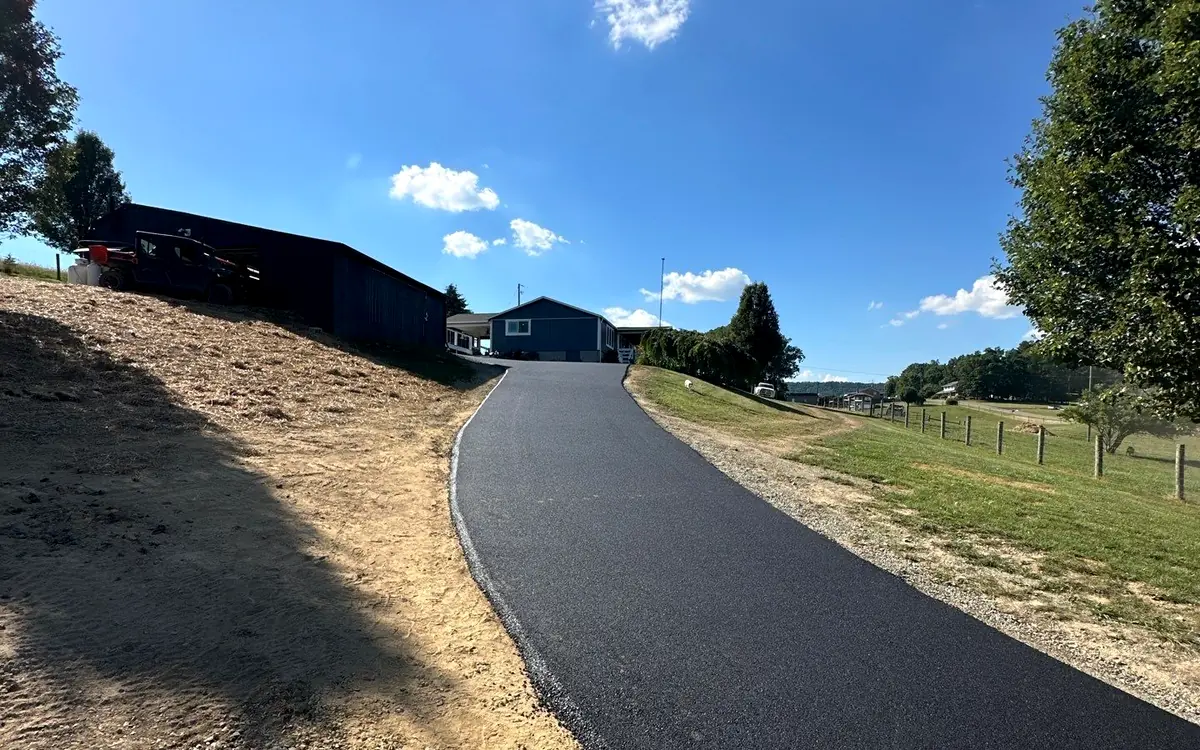
When an asphalt driveway starts to look tired, with cracks spreading, faded color, a few potholes and edges breaking away, most homeowners ask the same question. Can it be fixed with a new layer on top, or does the whole thing need to come out?
Both are real options, and both have their place. The right answer depends far less on how the surface looks and far more on what's going on underneath. Here's how to tell the difference before you get estimates.
What resurfacing actually means
Resurfacing, sometimes called an overlay, means laying a fresh layer of asphalt over your existing driveway. The old pavement stays in place and becomes part of the base for the new surface. Before the overlay goes down, the contractor cleans the surface, repairs damaged spots, fills cracks and makes sure the edges and transitions will work with the added height.
Done on the right driveway, resurfacing gives you a smooth new surface without the work of tearing everything out. It uses the strength that's still in the old pavement instead of throwing it away.
What replacing involves
Replacement means removing the old asphalt completely, fixing or rebuilding the base underneath, and paving from scratch. It's a bigger job, but it's the only way to correct problems that start below the surface, such as a weak base, poor drainage or soft soil.
Replacement is also a chance to change things. You can widen the driveway, change its shape, correct the slope so water runs off properly, or add a culvert or drain where water has been a problem.
Signs resurfacing may be enough
An overlay is often a good fit when:
- The cracks are mostly small and on the surface, not wide, deep or spreading in a web pattern.
- The driveway is still firm underfoot, with no soft spots, sinking or heaving.
- Water drains off properly instead of pooling.
- The problems are mostly cosmetic, such as fading, minor raveling or a rough surface.
- The edges are mostly intact.
In these cases, the base is doing its job, and a new layer on top can give the driveway a fresh start. Our asphalt repair and resurfacing page explains how we prepare and overlay an existing driveway.
Signs it's time to replace
Replacement is usually the better choice when you see:
- Alligator cracking. A pattern of interconnected cracks that looks like reptile skin usually means the base underneath has failed.
- Sinking, ruts or bumps where the surface has moved.
- Potholes that keep coming back in the same places.
- Water that pools on the surface or seeps out from underneath after rain.
- Large areas breaking apart, especially along the edges.
- A driveway that has already been overlaid before, where adding more height would create problems at the garage, walkways or the road.
Laying new asphalt over a failed base doesn't fix the base. The same cracks and dips tend to work their way up through the new layer, and you end up paying for the driveway twice. If the problems start underneath, the fix has to start there too. See our asphalt driveway paving page for how a full replacement is built.
Why Southwest Virginia driveways need a closer look
Our region is hard on pavement. Freeze-thaw cycles, heavy rain and hilly ground all put stress on driveways. Water that gets into cracks freezes, expands and breaks the pavement apart from the inside. The National Weather Service office in Blacksburg covers much of our area, and its forecasts show how often winter temperatures swing back and forth around freezing.
Slopes add another factor. On a sloped driveway, water runs fast and looks for any weak point. If the original driveway wasn't built with good drainage, an overlay won't change that. Sometimes the only real fix is to replace the driveway and correct the grade.
Protecting the driveway either way
Whichever route you take, regular maintenance makes the new surface last longer. Filling cracks early and sealcoating on a regular schedule keep water out of the base, which is the main cause of pavement failure.
The Federal Highway Administration's pavement preservation program explains why treating pavement early is more cost-effective than waiting until it fails, and the Virginia Asphalt Association has more general information on asphalt pavement in the state. Researchers at the Virginia Transportation Research Council also study how pavements hold up under Virginia's conditions.
If your driveway is gravel rather than asphalt, see our guide on whether you can pave over a gravel driveway.
Get an honest answer about your driveway
The best way to know whether your driveway needs resurfacing or replacing is to have someone look at it in person, check the base and the drainage, and explain what they find. Paving Plus works across Southwest Virginia, from Christiansburg to Roanoke and beyond. We'll tell you what your driveway actually needs, including when a simple repair is all it takes.
Call Paving Plus at (540) 731-3000.