
Can You Pave Over a Gravel Driveway
By Paving Plus · Published November 11, 2026
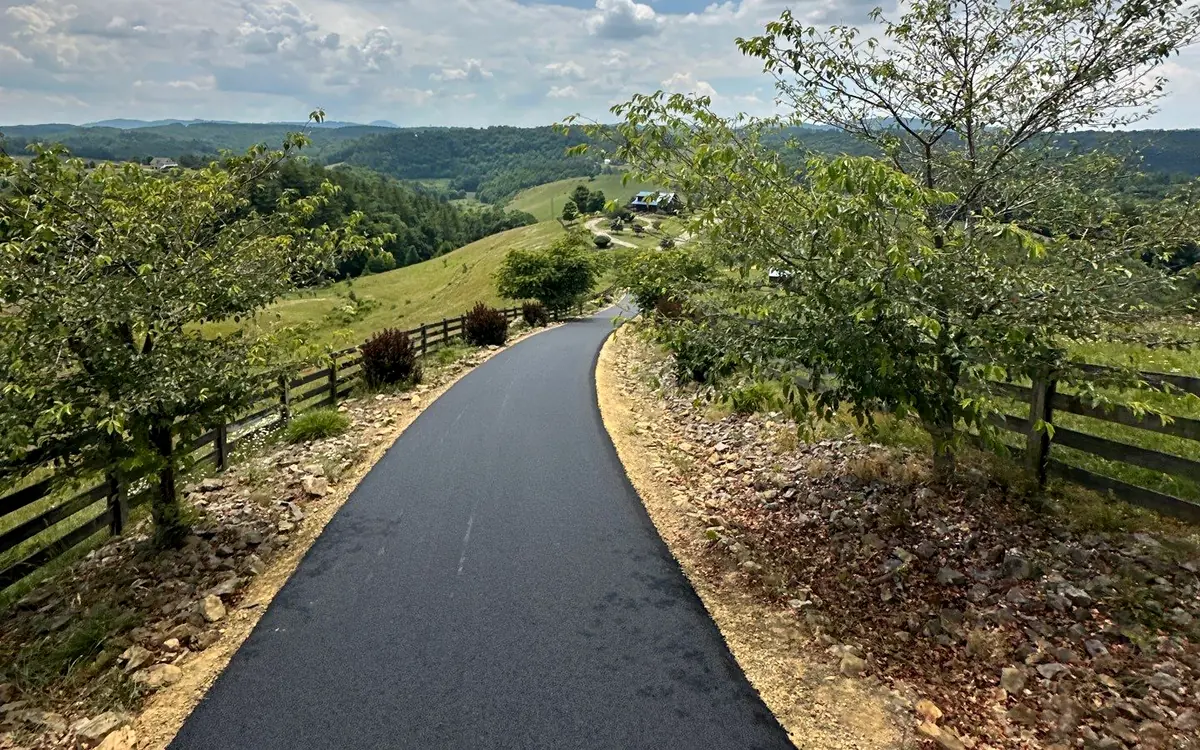
Gravel driveways are everywhere in Southwest Virginia. They're on farms in Floyd County, on ridge lots outside Christiansburg and on long lanes that run back from the road across Giles and Pulaski. Sooner or later, a lot of those owners get tired of potholes, washouts, dust and stones in the yard, and they start asking the same question. Can you pave over a gravel driveway?
The short answer is yes, very often you can. The longer answer is that the gravel you have now isn't automatically ready to sit under asphalt. Whether it works depends on what's underneath, how water moves across your property and how the driveway is used. Here's how to think it through before you call for an estimate.
Why gravel can make a good starting point
Asphalt doesn't carry weight on its own. It's a wearing surface that sits on top of a compacted stone base, and that base does most of the work of spreading the load from your car, a delivery truck or a tractor. A gravel driveway that has been driven on for years already has stone in place, and some of it may be well compacted.
That's why paving over gravel is often less work than starting from bare dirt. The existing stone can sometimes be regraded, topped up and compacted into a proper base instead of being hauled away. When that's possible, it saves material and time.
When the existing gravel isn't good enough
Plenty of gravel driveways aren't ready to be paved as they are. Common problems include:
- Thin or uneven stone. Over the years, gravel gets pushed to the sides, pressed into soft soil or washed away. Some spots may have plenty of stone and others almost none.
- Soft or wet ground underneath. If the soil below stays soft after rain, it can't support pavement. Asphalt laid over a weak base will crack and sink in the same places your gravel ruts today.
- Mud and organic material mixed in. Topsoil, clay and leaves worked into the gravel stop it from compacting properly.
- Ruts and potholes that keep coming back. If the same spots fail every year, there's usually a drainage or soil problem that has to be fixed first.
In these cases, the base has to be rebuilt. That can mean digging out the weak areas, adding new crushed stone in layers, and compacting each layer before any asphalt goes down. It's more work up front, but skipping it is the most common reason a new asphalt driveway fails early.
Drainage matters more than anything else
Water is the biggest enemy of any driveway. On a gravel drive, water soaks through and runs off fairly freely. Asphalt is different. It sheds water, so the water has to go somewhere, and if it ends up running along the edges or soaking into the base, it will break the pavement up from below.
This is a big deal on the hillsides and hollows of our region. Before paving, a good contractor looks at:
- The slope of the driveway and where runoff from the road, roof and yard ends up.
- Whether the driveway needs a crown or a cross slope so water runs off to one side.
- Whether ditches, culverts or a pipe under the driveway are needed to carry water away.
- The low spots where water pools today, because those will be the first places to fail.
The EPA's gravel roads maintenance and design manual and the FHWA's gravel roads construction and maintenance guide both explain how shape and drainage protect a road surface. The same principles apply to a long private driveway.
Asphalt or tar and chip over gravel?
If you're paving a long rural lane, asphalt isn't the only option. Tar and chip, also called chip seal, is built by spraying hot liquid asphalt over a compacted gravel base and pressing a layer of stone chips into it. It keeps a rough, stone look that suits a farmhouse or country property, and it gives good traction on slopes.
Asphalt gives you a smooth, uniform surface that's easy to plow and shovel, and it suits driveways that see a lot of turning and parking. Both need a solid base and good drainage. Our tar and chip vs asphalt driveway guide compares the two side by side, and our tar and chip page explains how that surface is installed.
What the process usually looks like
Every driveway is different, but paving over gravel generally follows these steps:
- Inspect the existing driveway, the soil and the drainage.
- Fix drainage problems, such as adding a culvert, regrading or cutting a ditch.
- Remove soft spots, mud and organic material.
- Add and grade new crushed stone where the base is thin.
- Compact the base thoroughly.
- Lay and compact the asphalt, or apply tar and chip.
- Finish the edges and the apron where the driveway meets the road.
If your driveway connects to a state-maintained road in Virginia, work at the entrance may fall under VDOT's land use permit regulations. It's worth checking before any work is done at the road.
Questions to ask before you hire
When you get estimates, ask each contractor:
- Will you reuse my existing gravel, or does the base need to be rebuilt? Why?
- How will you handle drainage on my property?
- What will you do at the entrance where the driveway meets the road?
- Is asphalt or tar and chip the better fit for my driveway, and why?
A contractor who can answer these clearly has actually looked at your site. The Virginia Asphalt Association also has general information on asphalt pavement in the state.
Thinking about paving your gravel driveway?
Paving Plus paves and resurfaces driveways across Southwest Virginia, from Roanoke and Christiansburg to Floyd and beyond. We'll look at your gravel, your base and your drainage, and tell you honestly what it will take. Learn more about our asphalt driveway paving.
Call Paving Plus at (540) 731-3000.